_20240923100349.svg)
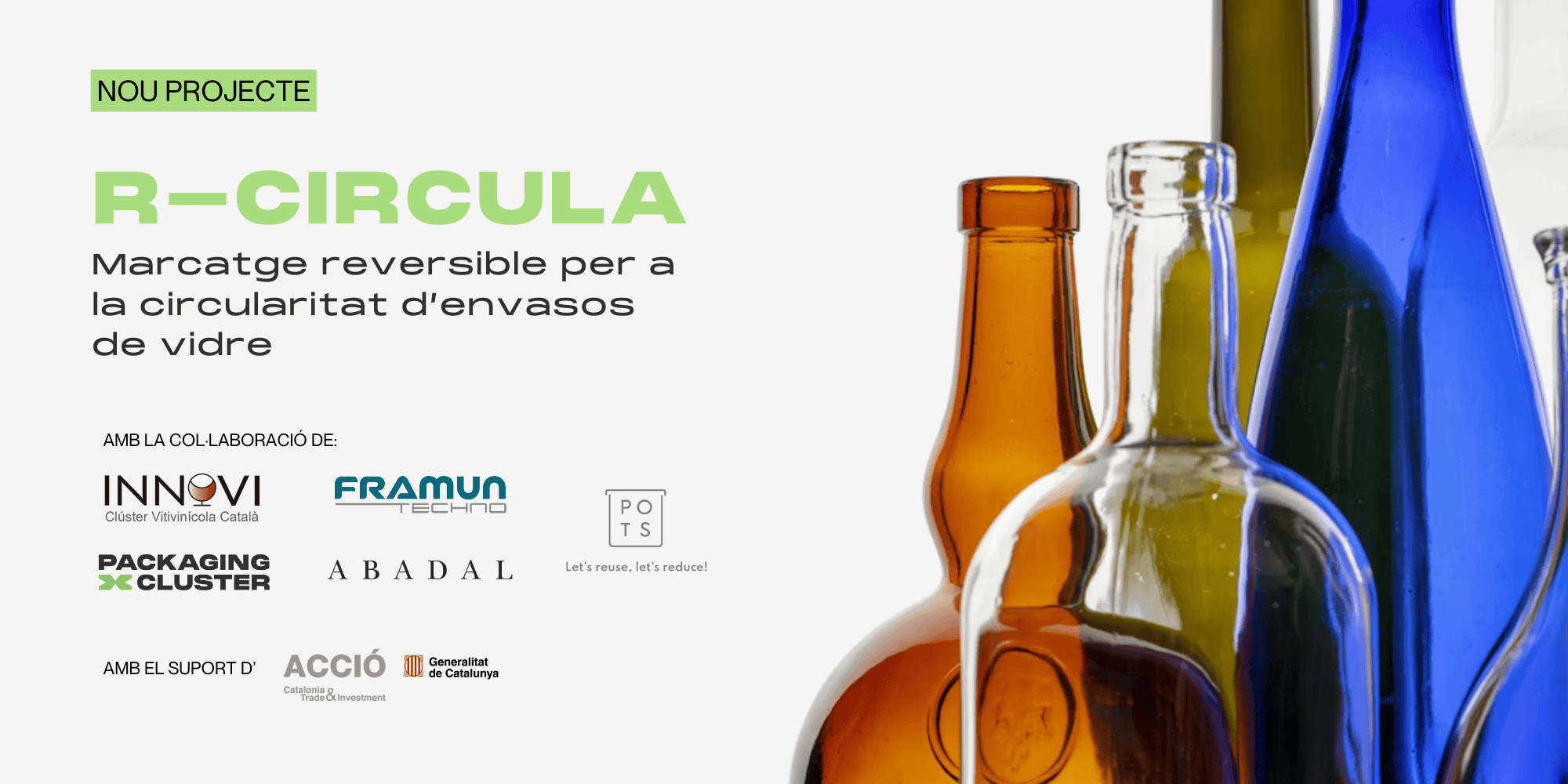
Driving the reuse of glass packaging in the wine sector
- The R-CIRCULA project aims to develop a temporary marking system for glass bottles, enabling their reuse and overcoming one of the main barriers to the circular economy in the wine sector.
- Led by INNOVI and Packaging Cluster, with the participation of key companies along the value chain, the project seeks to reduce waste, save resources and lower CO₂ emissions, with future applicability to other sectors.
The project R-CIRCULA: Reversible Marking for the Circularity of Glass Packaging officially begins its implementation with the aim of developing and validating an innovative solution that enables the reuse of glass bottles, overcoming one of the main technical barriers to the circular economy in the wine sector: the permanent marking of packaging.
The initiative is led by the INNOVI and Packaging Cluster clusters and involves the participation of Framun (the company behind Macsa), POTS (an industrial washing facility) and Celler Abadal, companies representing different links in the reusable packaging value chain. The project is part of the 2025 call for grants for cooperative cluster projects, supported by ACCIÓ, with a total budget close to €100,000, and will run until August 2026.
Currently, most glass bottles incorporate permanently engraved traceability codes, usually applied by laser or indelible inks, which hinder or even prevent their reuse across multiple cycles. R-CIRCULA addresses this challenge by developing temporary or removable marking solutions that can withstand normal bottle usage conditions but can be safely and efficiently removed during the industrial washing process.
The project is structured into four work packages, including the analysis of the technical challenge posed by current marking systems, the identification and selection of alternative technologies, the testing and validation of solutions in real production and reuse environments, and the definition of a replicable and scalable model with potential application in other sectors such as food, cosmetics or beverages.
Beyond its technological impact, R-CIRCULA will contribute to waste reduction, savings in material and energy resources, and a decrease in CO₂ emissions, aligning with the Sustainable Development Goals (SDGs 9, 12 and 13) and with future European regulatory requirements on sustainable packaging.
Through R-CIRCULA, INNOVI and Packaging Cluster strengthen their role as driving forces of collaborative innovation, promoting concrete and transferable solutions so that glass reuse moves from a theoretical challenge to a viable and scalable industrial reality.
DesLamTin: The innovative solution to make multilayer flexible packaging recyclable through delaminating and advanced de-emptying
16 March 2026
Development of a varnish with functional capsules for delaminating and the use of bio-based solvent for de-inking
Packaging Cluster renews the European Gold Label for Excellence
11 March 2026
The Packaging Cluster has successfully renewed the Gold Label certification, the highest European quality label for cluster management.
SIGMA: Transforming industrial maintenance with generative AI in the packaging sector
2 March 2026
The Packaging Cluster is leading a new strateg icinitiative: the SIGMA project - Integration of a generative AI assistant for the Q-PLANT MM maintenance software in production plants.